Artificial Intelligence (AI) is no longer a distant concept but actively transforming the educational landscape. The white paper “A White Paper on AI and Education” comprehensively explores how AI is reshaping education, from personalized learning experiences to redefining the roles of educators and students. This paradigm shift is not merely about integrating technology into classrooms—it represents a fundamental rethinking of educational practices to prepare institutions and learners for an AI-driven future.

The transformative potential of AI in education lies in its ability to personalize learning at scale. AI-powered tools can adapt to individual student needs, providing tailored content and immediate feedback that enhances engagement and academic outcomes. For instance, adaptive learning systems analyze student performance in real time, identifying gaps and adjusting instruction accordingly. This capability addresses longstanding challenges such as inclusivity and accessibility, enabling students from diverse backgrounds to receive equitable support.
Educators are also witnessing a profound evolution in their roles. As AI systems take over routine tasks like grading and basic assessments, teachers can focus on higher-value activities—developing critical thinking skills, designing complex learning experiences, and fostering ethical AI use among students. This shift demands significant professional development to ensure educators have the technical and pedagogical skills required for effective AI integration.
Students must be systematically prepared for an AI-integrated world through comprehensive curricula emphasizing AI literacy, ethical considerations, and hands-on problem-solving experiences. Developing critical thinking skills alongside technical competencies ensures that students remain active participants rather than passive consumers in shaping the future of technology.
However, integrating AI into education is not without challenges. Equitable access across socioeconomic divides, algorithmic bias, data privacy concerns, and human agency in automated environments require thoughtful governance frameworks and ethical guidelines. Institutions must prioritize transparency, inclusivity, and accountability when implementing AI technologies to avoid exacerbating inequalities.
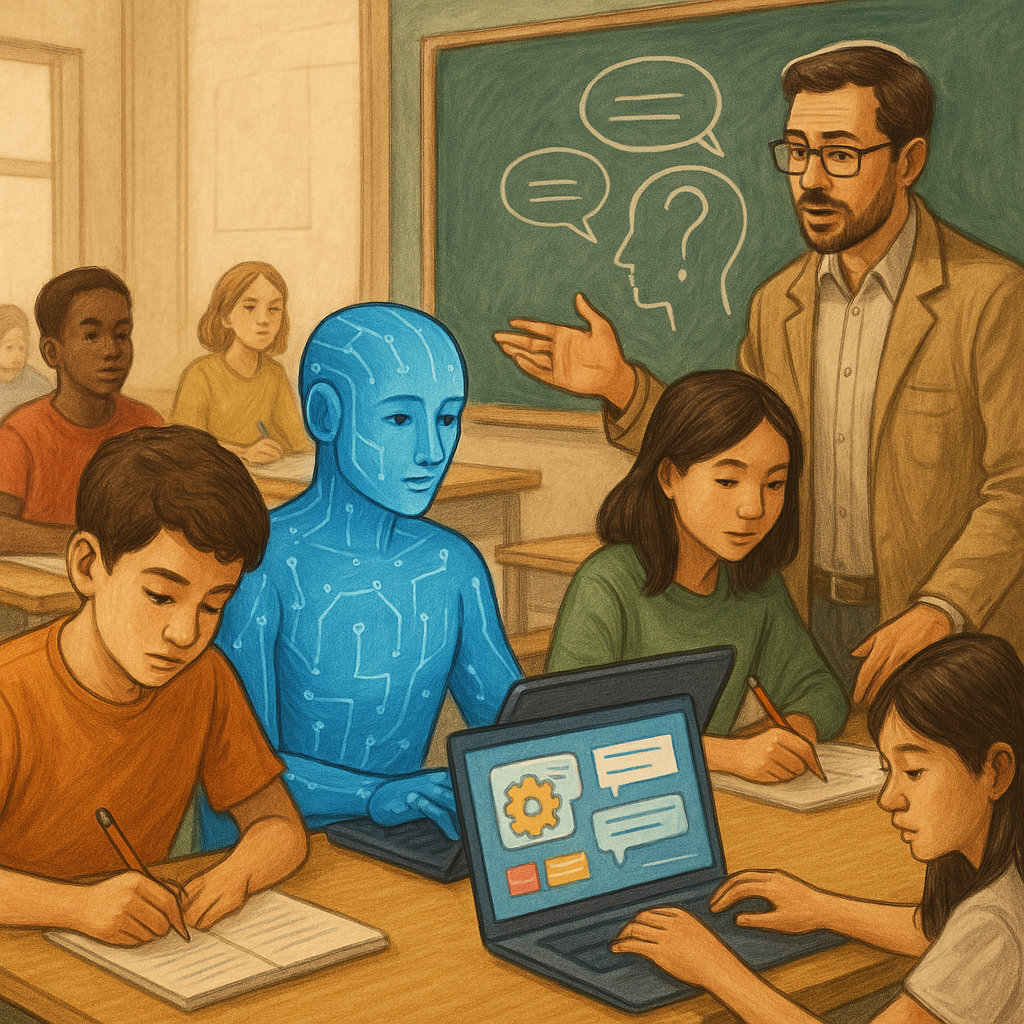
Looking ahead, the future of AI in education promises exciting possibilities. Emerging applications such as intelligent tutoring systems and immersive virtual learning environments are set to redefine how knowledge is delivered and consumed. Yet, these advancements must be balanced with preserving essential human elements—creativity, empathy, and ethical reasoning—that remain irreplaceable even as technology advances.
The white paper concludes with a call for institutions to adopt strategic approaches that align technological adoption with pedagogical objectives. By viewing AI as an enhancement rather than a replacement for human teaching, educational institutions can create more inclusive, innovative, and responsive systems that empower educators and students.
By embracing these transformative insights and strategies outlined in the white paper, stakeholders across the educational ecosystem can ensure that AI becomes a catalyst for meaningful progress rather than a disruptive force.
Download the paper here.
If you want to see more on our departmental AI in Education initiatives, look here.
 Tom Van Woensel