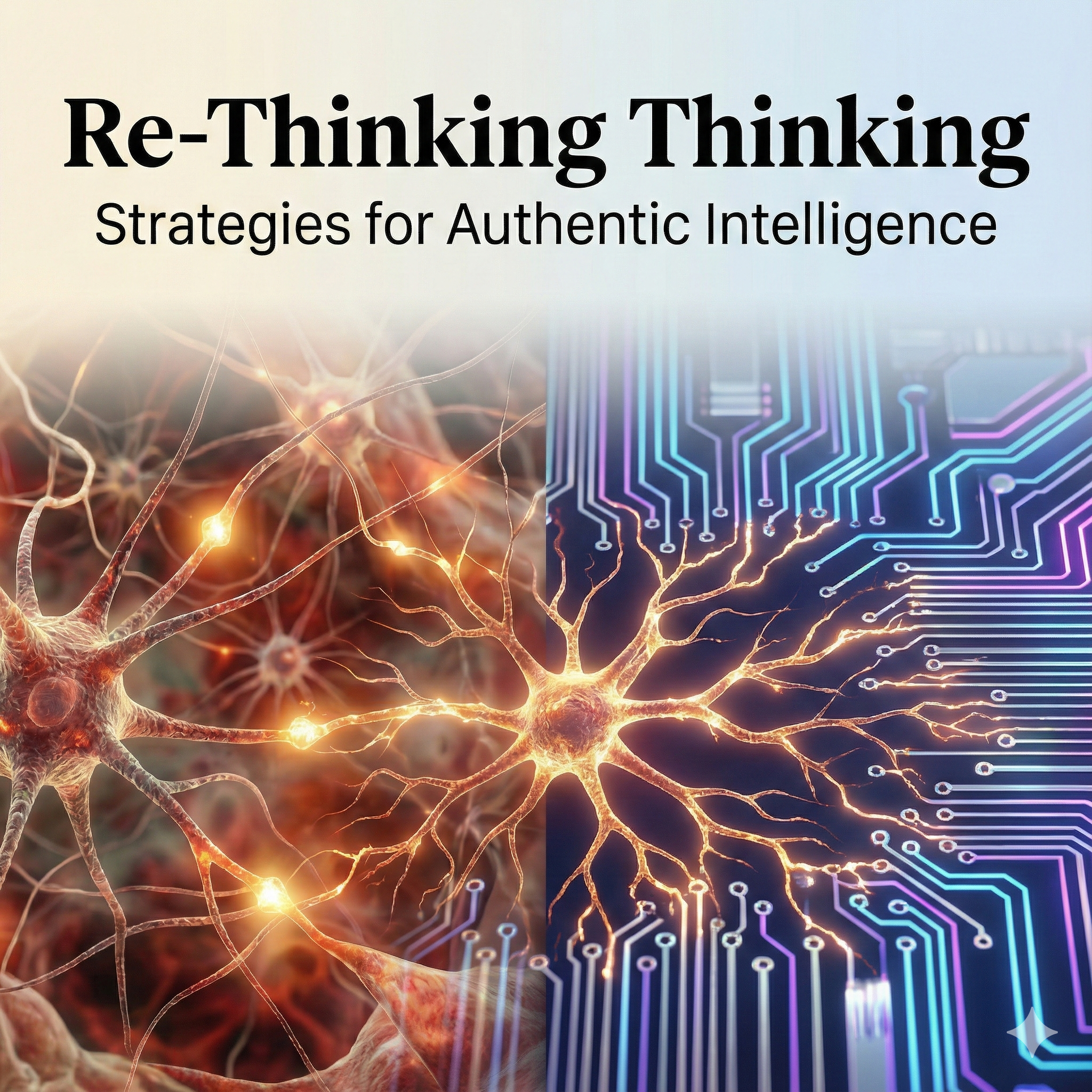
It’s 2:00 AM in a dorm room. A student is panic-studying for a biochemistry exam. They are struggling with a complex concept in enzyme kinetics.
Ten years ago, that student might have knocked on a neighbor’s door, called a classmate, or just suffered through the anxiety until the professor’s office hours the next day.
Today, they type the question into ChatGPT. In three seconds, they get a perfect, customized explanation. The anxiety vanishes. They understand the concept.
On the surface, this is a miracle of efficiency. But if we zoom out, we have to ask: What was lost in that transaction?
In our fifth post on Re-thinking thinking: Authentic Intelligence, we examine the social cost of efficiency. As AI becomes the ultimate 24/7 tutor, therapist, and sounding board, we risk hollowing out the most valuable part of the university experience: human connection.
The “Empathy Gap”
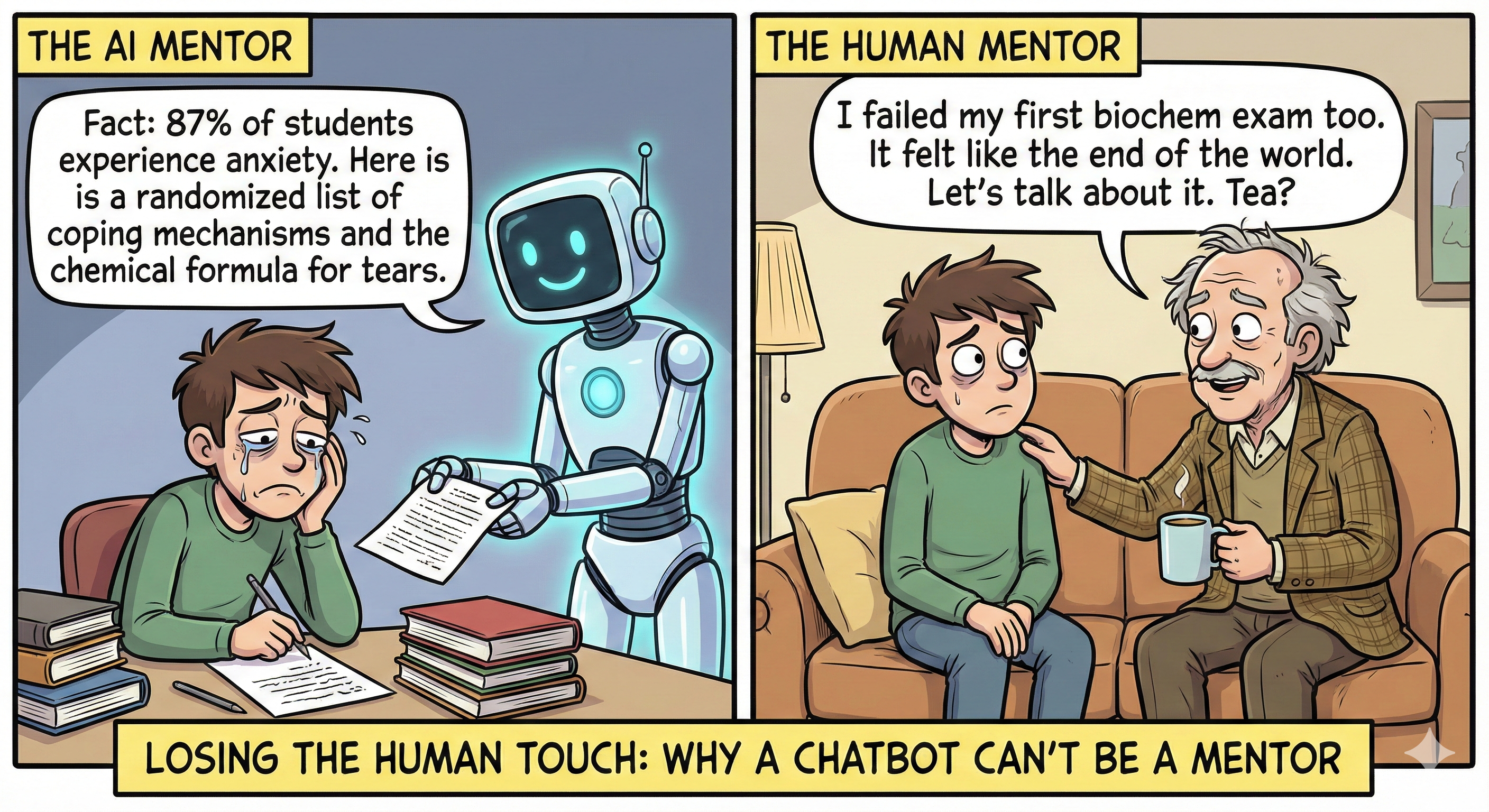
AI is incredible at simulating human interaction. It is polite, patient, and endlessly knowledgeable. However, it lacks the fundamental components of mentorship: shared vulnerability and genuine care.
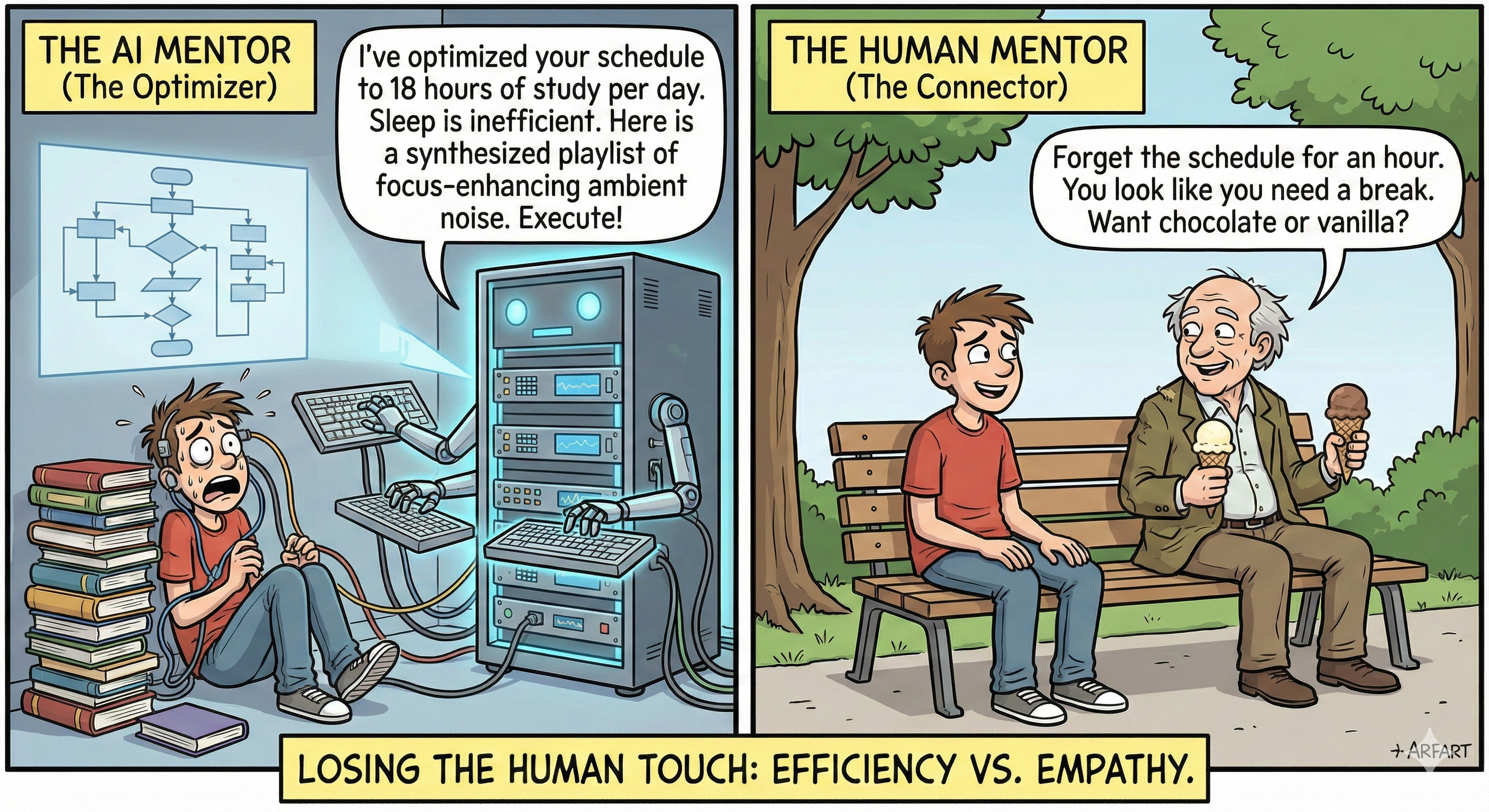
An AI doesn’t care if you pass or fail. It does not matter if the bags under your eyes are getting darker every week. It cannot look you in the eye and say, “I know this is hard, but I believe you can do it,” and actually mean it.
If we allow students to replace human mentors with digital ones, we are depriving them of the emotional scaffolding necessary for real growth. We are trading deep relationships for shallow transactions.
The Echo Chamber of One
Beyond mentorship, we risk losing the essential friction of peer-to-peer learning.
Learning is supposed to be messy. It involves debating a classmate who fundamentally disagrees with you, navigating a clumsy group project, or having a professor challenge your core assumptions in front of a seminar group.
AI, by design, is agreeable. It wants to be helpful. It is the ultimate “yes man.” If a student spends four years interacting primarily with agreeable algorithms, they graduate without the “soft skills” that the real world demands:
- How to read a room.
- How to negotiate conflict without logging off.
- How to handle being told “you are wrong” by another human being.
Employers are already reporting a “crisis of connection” in recent graduates. If the university becomes a place where students sit alone in rooms staring at screens, that crisis will become a catastrophe.
The Solution: The “Premium Human Experience”
If AI is better at delivering facts than a lecturer standing at a podium, then what is the university for?
We need a radical strategic pivot. We must stop competing with AI on content delivery and start doubling down on what AI cannot do. The “value proposition” of the university is no longer access to information.
It is access to other humans.
Here is how we structure for Authentic Intelligence:
1. The “Seminar Revival” (Flip the Classroom)
The 300-person lecture hall is obsolete. An AI can summarize those facts more effectively and more quickly.
- The Strategy: Move content delivery (lectures) to video for at-home viewing. Re-allocate campus time and resources almost exclusively to small-group seminars, labs, and debates.
- The Goal: Class time should be for interaction, not consumption. Attendance is mandatory because your physical presence adds value to the group.
2. Mentorship Over Marking
Professors are currently drowning in grading duties that AI could partially assist with.
- The Strategy: Shift faculty incentives. Reward professors not only for research output but also for time spent in structured mentorship.
- The Goal: Free up faculty time so they can stop being “essay graders” and start being mentors who guide students through career choices, ethical dilemmas, and intellectual roadblocks.
3. Designated “Unplugged” Zones
We need to carve out spaces where human interaction is the only option.
- The Strategy: Create campus spaces, certain lounges, dining times, or specific seminar rooms that are designated “screen-free.”
- The Goal: Force the kind of serendipitous, awkward, beautiful human collisions that lead to lifelong friendships and unexpected ideas.
The Bottom Line
An education without human connection isn’t an education. It’s just a data download.
If we want our students to develop Authentic Intelligence, we must ensure that their university experience is defined not by the efficiency of their bots but by the quality of their relationships.
 Tom Van Woensel