Imagine a student crossing the graduation stage in 2030. By the time they shake the Dean’s hand, the AI models we panic about today (GPT-4, Gemini, Claude) will look as primitive as a dial-up modem.
That graduate is entering a workforce in which many of the technical skills they learned in their first year may be automatable. Coding? The AI does it faster. Copywriting? The AI does it cheaper. Data analysis? The AI does it instantly.
So, the terrifying question keeps them up at night: “If the machine can do everything I studied, what am I for?”
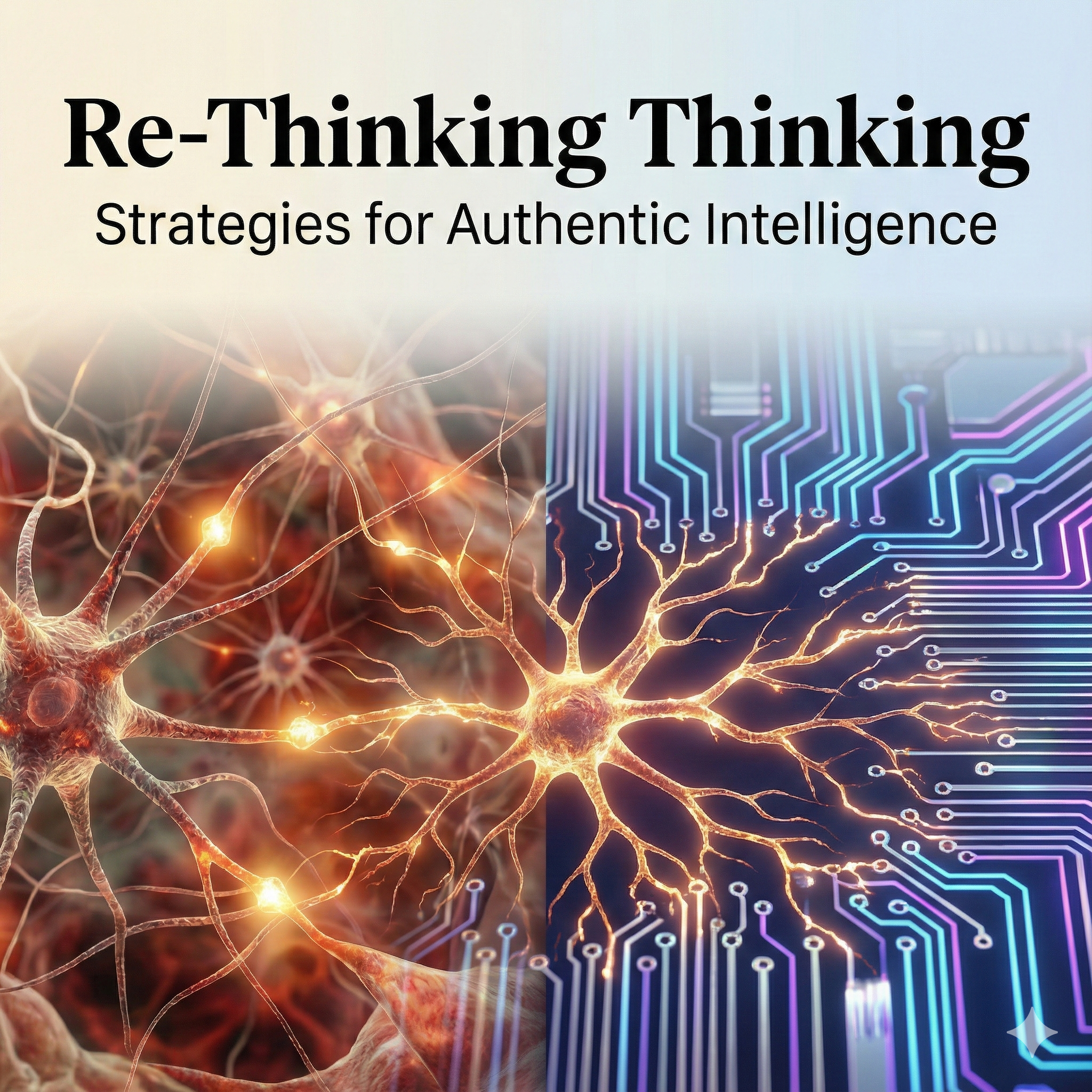
In this post on Re-thinking thinking: Authentic Intelligence, we offer the answer. The goal of the modern university is no longer to train students to be “smart” in the way computers are “smart”. It is to train them to be human in a way that computers can never be.
The Paradox of Value
There is an economic paradox at play here: When a resource becomes cheap, its complement becomes expensive.
AI has made the generation of text, code, and data cheap. Therefore, the skills that complement these, judgment, empathy, and original insight, are about to become prohibitively expensive.
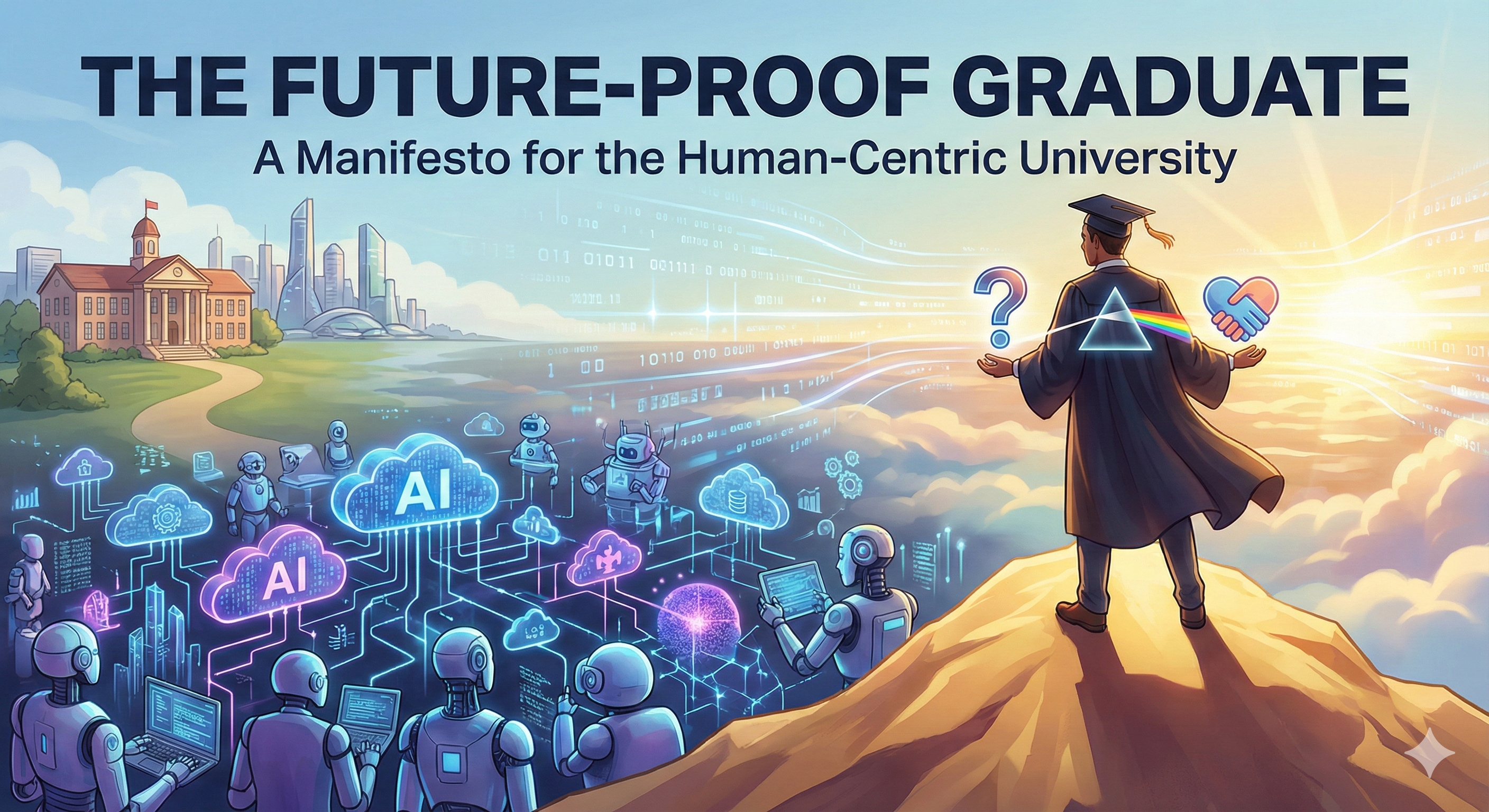
The future-proof graduate does not try to outcompute the computer. They double down on the three things the machine cannot do.
The Trinity of Authentic Intelligence
1. The Questioner (vs. The Answerer)
For 100 years, education has rewarded the student with the correct answer. In the AI age, answers are a commodity. They are free and instant.
- The Future Skill: The ability to ask the right question.
- The Graduate: They don’t just solve the problem given to them; they ask, “Is this the right problem to solve?” They are the architects who direct the AI, not the bricklayers who follow it.
2. The Synthesizer (vs. The Generator)
AI is a generator. It can generate 500 ideas per minute. Most of them will be average. Some will be hallucinations.
- The Future Skill: Taste, discernment, and verification.
- The Graduate: They are the editor-in-chief. They have the deep knowledge required to look at the AI’s output and say, “This part is brilliant, this part is derivative, and this part is false.” They provide the “Truth Anchor” in a sea of synthetic content.
3. The Connector (vs. The Simulator)
AI can simulate empathy. It can write a condolence letter or a motivational speech. But it feels nothing.
- The Future Skill: Radical human connection.
- The Graduate: They can read a room. They can negotiate a peace treaty between conflicting departments. They can mentor a junior colleague. They bring the “warmth” that makes the “competence” of AI actually usable.
The Manifesto: The Human-Centric University
To produce these graduates, our institutions must change. We need to stop obsessing over efficiency and start obsessing over humanity.
- Less Testing, More Talking: We need fewer multiple-choice exams (which AI can pass) and more oral defenses, debates, and capstone projects.
- Slow Thinking: In a world of instant speed, the university must be a sanctuary for slowness—for deep reading, long deliberation, and the “messy middle” of the creative process.
- Unplugged Spaces: We must preserve physical spaces where digital tools are banned, reminding students that their brains are the primary instruments of their success.
Conclusion: The Torch is Passed
The rise of AI is not the end of thinking. It is the beginning of a higher kind of thinking.
We are automating the bottom of the cognitive ladder: rote memorization, basic summarization, and grammar checking. This clears the rung for our students to climb higher, to the realm of true creativity, ethics, and wisdom.
We shouldn’t fear the robot. We should fear becoming robots ourselves.
If we teach our students to value their authentic voices, to protect their data, to question algorithms, and to care for one another, they won’t just survive the AI revolution. They will lead it.
 Tom Van Woensel