
If you close your eyes and think back to 1979, a very specific, synthesized sound probably comes to mind. It was the sound of The Buggles’ Video Killed the Radio Star, the song that famously launched MTV and heralded a seismic shift in media consumption.
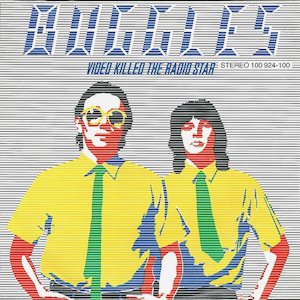
The song wasn’t just a catchy tune; it was a powerful piece of pop prophecy. It captured the anxiety of an era where a dominant form of creator (the radio artist, who captured the world through audio) was being violently displaced by a new medium (video, which demanded visual sizzle over vocal quality).
Today, standing at the precipice of the Generative AI revolution in academia, I can’t help but feel we are living through that song all over again.
The New “Symphony, Rewritten by Machine”
The Buggles sang a line that has become chillingly relevant to the LLM era:
They took the credit for your second symphony
Rewritten by machine on new technology.
For decades, the “star” of higher education has been the traditional lecturer, the expert who spent a career composing unique, complex knowledge (their symphony) and delivering it from the lectern. Students, the audience, tuned in to this single frequency to receive that knowledge.
AI has broken that frequency.
The generation and synthesis of content, once the hard-won preserve of the professor, is now instantly accessible, personalized, and “rewritten by machine.” The student who used to wait all week for a specific lecture now gets a tailored summary from ChatGPT in five seconds.
The displacement the radio star felt is precisely what many traditional educators are feeling now: My medium is no longer enough.
The Anxiety of the “Human Touch”
The emotional core of the song is nostalgia, the “(Oh-a-oh!)” cry for an era where things felt more “real,” before they became “glossy” and artificial.
In our field, this is the central tension of AI adoption. If we fully automate feedback, content creation, and mentorship, do we lose the essential human friction that drives deep learning? Can an AI navigate a student through a personal failure? The legitimate fear is that by chasing the undeniable efficiency of AI, we might lose the pedagogy of relationship, the “soul” of the academic experience.
But Remember: Radio Didn’t Actually Die
This is where the analogy offers us its most powerful lesson. The song predicted the end of an era, but history reveals a twist.
Video, in fact, did not “kill” the radio star.
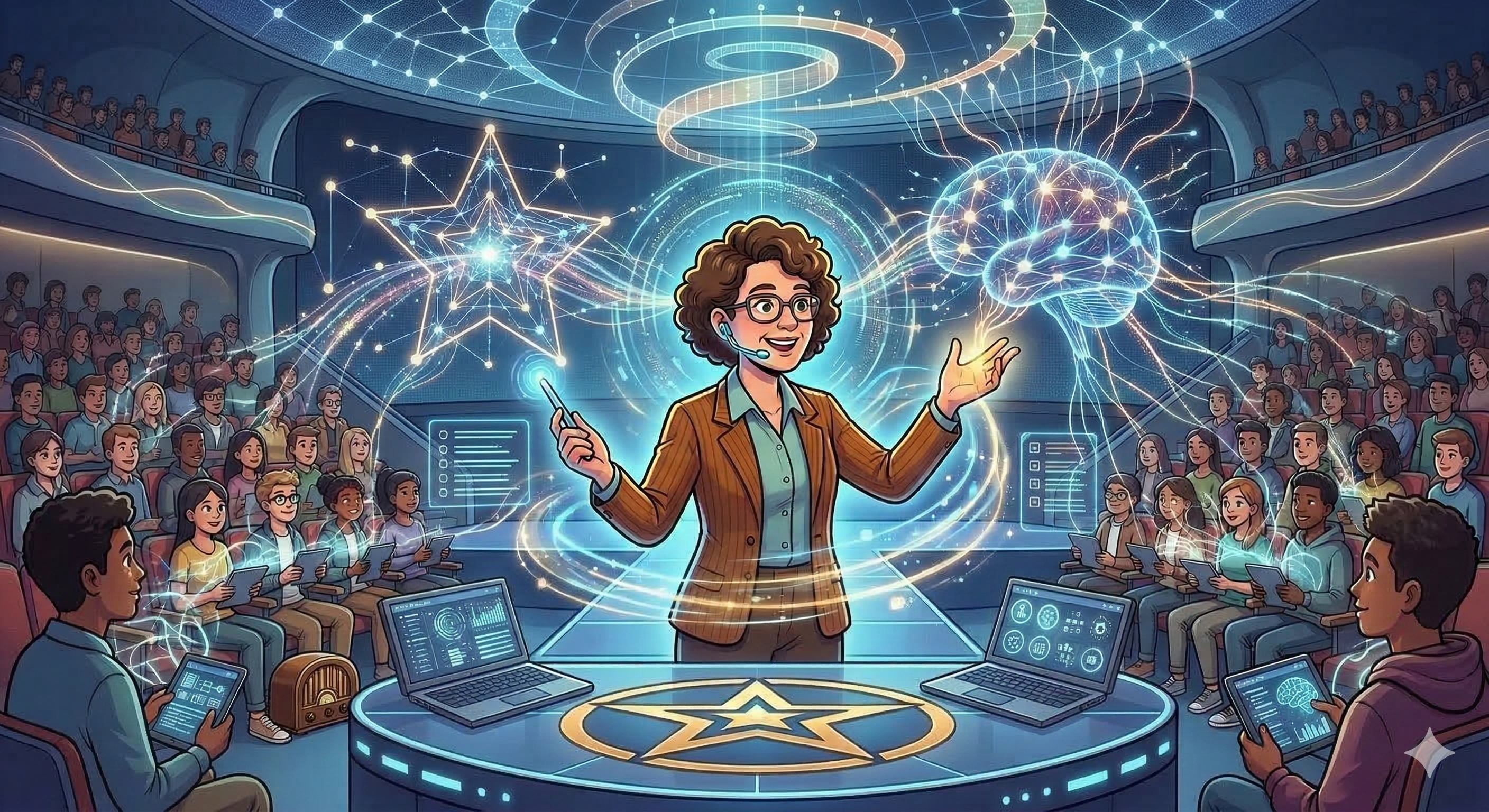
Video changed the landscape entirely. MTV exploded, but radio stars didn’t disappear. They transformed. Radio evolved into talk formats, powerful niche broadcasting, and eventually, the intimacy of the podcast revolution. Radio survived because it doubled down on what video couldn’t: unmatched portability, immediate community connection, and the intense intimacy of a voice speaking directly into your ear.
This is the mandate for modern education.
Re-tuning Our Own Frequency
We must stop fighting the medium. We will not “stop AI,” just as the radio stations couldn’t stop MTV. Instead, we must use AI to allow our stars to adapt.
If AI handles the rote delivery of content, the professor can stop being the content-dispenser and start being the context-creator. The future “academic star” is not the “Sage on the Stage” but the dynamic guide, the expert coach, and the facilitator of complex problem-solving.
We must update our programs to prioritize the niche AI cannot fill:
- Intense Mentorship: Moving beyond grading to dynamic coaching.
- Critical Thought: Moving beyond answering questions to formulating the right questions.
- Complexity Management: Guiding students through multifaceted challenges that have no single ‘synthesized’ answer.
The synth music of ’79 might sound dated, but its lesson is evergreen: technology shifts the medium, but the human need for genuine connection, synthesis, and mentorship remains the master track. We just need to re-tune our frequency so it can shine.
I’d love to hear your thoughts. How is your institution managing this cultural and technological shift? Are we seeing the death of an old paradigm, or the birth of a more effective one?
 Tom Van Woensel